
7 Mistakes You're Making with Your 50+ Fitness Routine (and How to Fix Them)
Fitness
Here's the truth: fitness after 50 isn't about doing more. It's about doing what actually works for your body right now.
If you've been exercising for a while but feel like you're spinning your wheels: or worse, dealing with nagging aches and injuries: you're not alone. We've worked with hundreds of clients over 50 at HBR Personal Training in Alexandria, VA, and we see the same patterns over and over again.
The good news? These mistakes are completely fixable. And once you understand what's holding you back, you can start making real, measurable progress: without working harder or spending more time in the gym.
Let's break down the seven most common mistakes and exactly how to fix them.
Mistake #1: You're Treating Cardio Like It's the Whole Program
Walking, jogging, cycling, the elliptical: these are great activities. But if cardio is the foundation of your fitness routine after 50, you're missing the most important piece of the puzzle.
Here's the reality: after age 30, we lose approximately 3-8% of our muscle mass per decade. And that rate accelerates after 50. Less muscle means a slower metabolism, weaker bones, and a higher risk of falls and injuries.
Research consistently shows that strength training is the single most important type of exercise for adults over 50. It protects your joints, improves bone density, and keeps your metabolism hum ming.
The fix: Make strength training your primary focus: at least 2-3 sessions per week. Cardio can still play a supporting role, but it shouldn't be the star of the show.

Mistake #2: You're Stuck in the "Moderate Cardio" Zone
Speaking of cardio: if you're spending 45 minutes on the treadmill at a moderate pace, thinking you're doing your body a favor, let's talk.
This type of exercise falls into what trainers call the "no benefit zone." It's not intense enough to build cardiovascular fitness, and it can actually interfere with your strength gains. Worse, repetitive moderate-intensity cardio is a common contributor to overuse injuries.
The fix: Replace those moderate cardio sessions with either:
• Low-impact HIIT (short bursts of effort followed by recovery)
• Long, slow activities you enjoy like leisurely walks, golf, or swimming
Both options give you cardiovascular benefits without sabotaging your muscle-building efforts. Think about it: you don't need to grind it out on an elliptical to stay fit. You just need to be strategic.
Mistake #3: You're Using the Wrong Weight
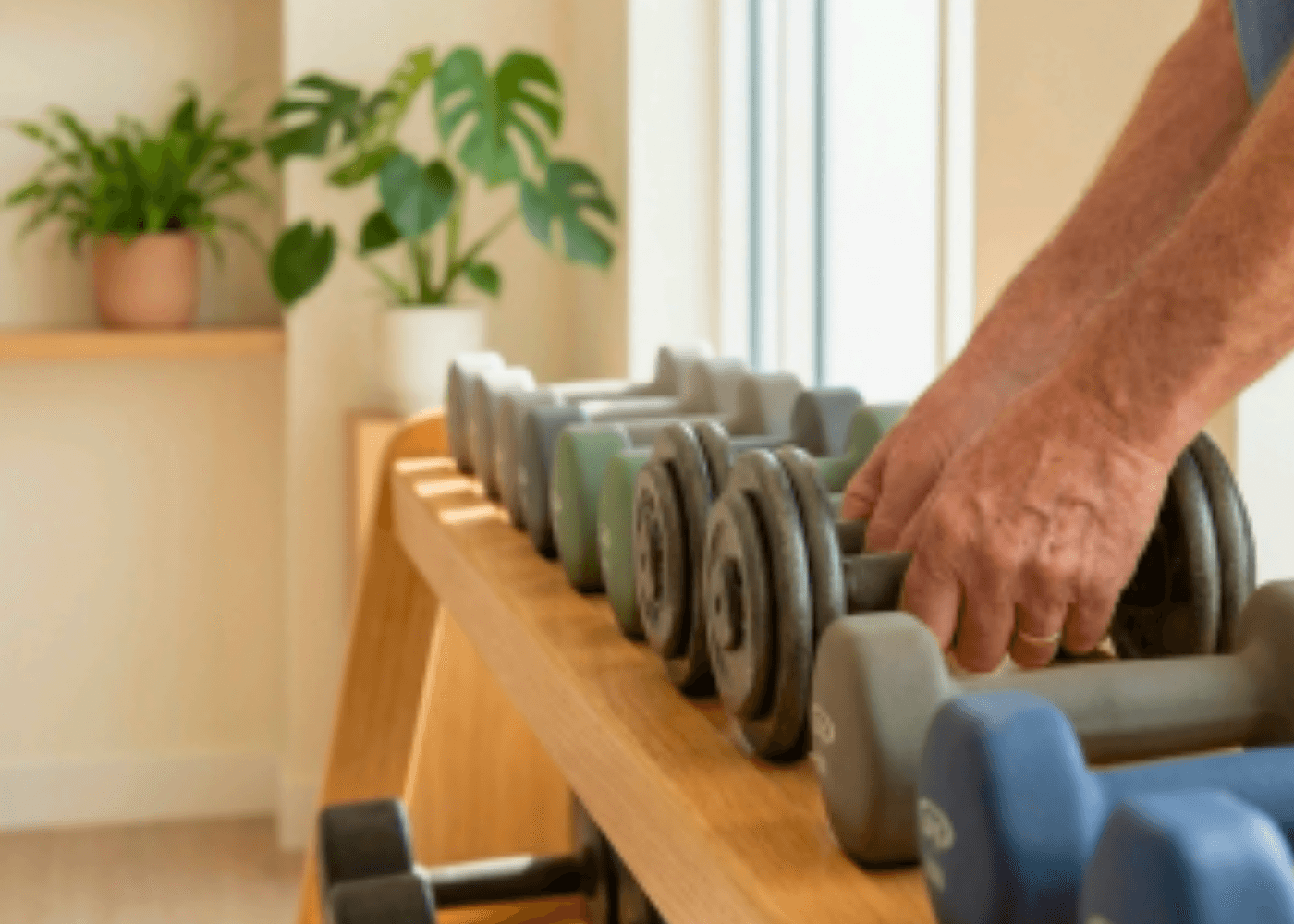
This one goes both ways. Some people lift weights that are way too heavy, increasing their injury risk. Others stick with the same light dumbbells for years, wondering why they're not getting stronger.
Neuroscience tells us that your muscles need progressive challenge to adapt and grow. If you're not gradually increasing the resistance over time, your body has no reason to change.
The fix: Choose a weight that allows you to complete 10-12 repetitions with good form: but those last few reps should feel challenging. Once you can complete your set easily, it's time to increase the weight slightly.
And here's a key point: form always comes first. If your technique breaks down, the weight is too heavy. Period.
Mistake #4: You're Rushing Through Your Reps
We get it: you want to get your workout done and move on with your day. But speeding through your exercises, especially during the lowering phase, is costing you results and putting you at risk for injury.
When you let gravity do the work on the way down, you're skipping the eccentric contraction: which is actually where a lot of the muscle-building magic happens.
The fix: Slow down. Take 3-4 seconds to lower the weight on every rep. This increases time under tension, builds more strength, and protects your joints.
It might feel harder at first (because it is), but you'll notice a difference in your results: and you'll stay healthier in the process.
Mistake #5: You're Ignoring Mobility Work
This is a big one. If you're not prioritizing mobility, you're setting yourself up for limitations that compound over time.
Mobility isn't just about being "flexible." It's about having the range of motion and control to move well through daily life: reaching overhead, squatting down, and rotating your spine. When mobility declines, everything gets harder. And generic workout plans almost never address this.
Here's the thing about the 50+ body: it needs personalized attention. A cookie-cutter program designed for a 25-year-old isn't going to serve you. Your hips, shoulders, and spine have a unique history. They need programming that accounts for where you are right now.
The fix: Include dedicated mobility work in every training session. Focus on the areas where you're most limited: for most people, that's hips, thoracic spine, and shoulders. A qualified trainer can assess your specific needs and build mobility into your strength program.
At HBR Personal Training, we start every client relationship with a comprehensive movement assessment. Because we can't design a program that works for you if we don't know what your body actually needs.

Mistake #6: You're Training Too Often (Without Enough Recovery)
More isn't always better. In fact, if you're exercising every single day, you might be undermining your own progress.
Here's the reality: your muscles don't get stronger during your workout. They get stronger during recovery: when your body repairs and rebuilds tissue. Skip that recovery window, and you're just breaking down without building back up.
This becomes even more important after 50, when recovery takes a bit longer than it used to.
The fix: Train 3-4 times per week with at least one full rest day between intense sessions. Use your off days for light movement: walking, stretching, or gentle yoga: but give your body the time it needs to adapt.
Consistency matters more than frequency. As we like to say: consistency over perfection.
Mistake #7: You Don't Have a Real Plan
This might be the most common mistake of all. You show up at the gym, do whatever feels right that day, and hope for the best.
But hope isn't a strategy. Without a structured plan, it's nearly impossible to track progress, build on what's working, or know when to adjust.
And let's be honest: when there's no plan, workouts are the first thing to get skipped when life gets busy.
The fix: Plan your workouts at least a week in advance. Include a balance of:
Strength training (your priority)
Low-impact cardio or HIIT
Core and balance work
Mobility and posture exercises
And here's a pro tip: stick with your program for at least 4-6 weeks before making major changes. Jumping around from workout to workout can actually reverse your progress.
If you're not sure how to structure a program that fits your goals and your body, that's exactly what we're here for. At HBR Personal Training, we build custom programs based on real data: not guesswork. We use the InBody Scanner to track body composition changes accurately, so you can see exactly what's happening with your muscle mass, body fat, and more. No more wondering if your program is working.

The Bottom Line
Fitness after 50 isn't about doing what worked in your 30s. It's about doing what works for your body now: with intention, intelligence, and a plan that actually fits you.
Here's a quick recap of what to focus on:
Prioritize strength training over cardio
Ditch moderate steady-state cardio for HIIT or low-intensity movement
Use the right weight: challenging but controlled
Slow down your reps to maximize results and minimize injury
Include mobility work in every session
Allow adequate recovery between training days
Follow a structured plan and stick with it
If you're in the Alexandria, VA area and you're ready to stop guessing and start seeing real results, reach out to us. We specialize in science-backed, personalized training for adults who want to feel strong, move well, and build a fitness routine that actually lasts.
Because at the end of the day, this isn't about quick fixes. It's about the long game: building a body that supports you for decades to come.
The better you move, the further you go.
ARTICLES


