Why Generic Workout Plans Usually Stop Working
Fitness
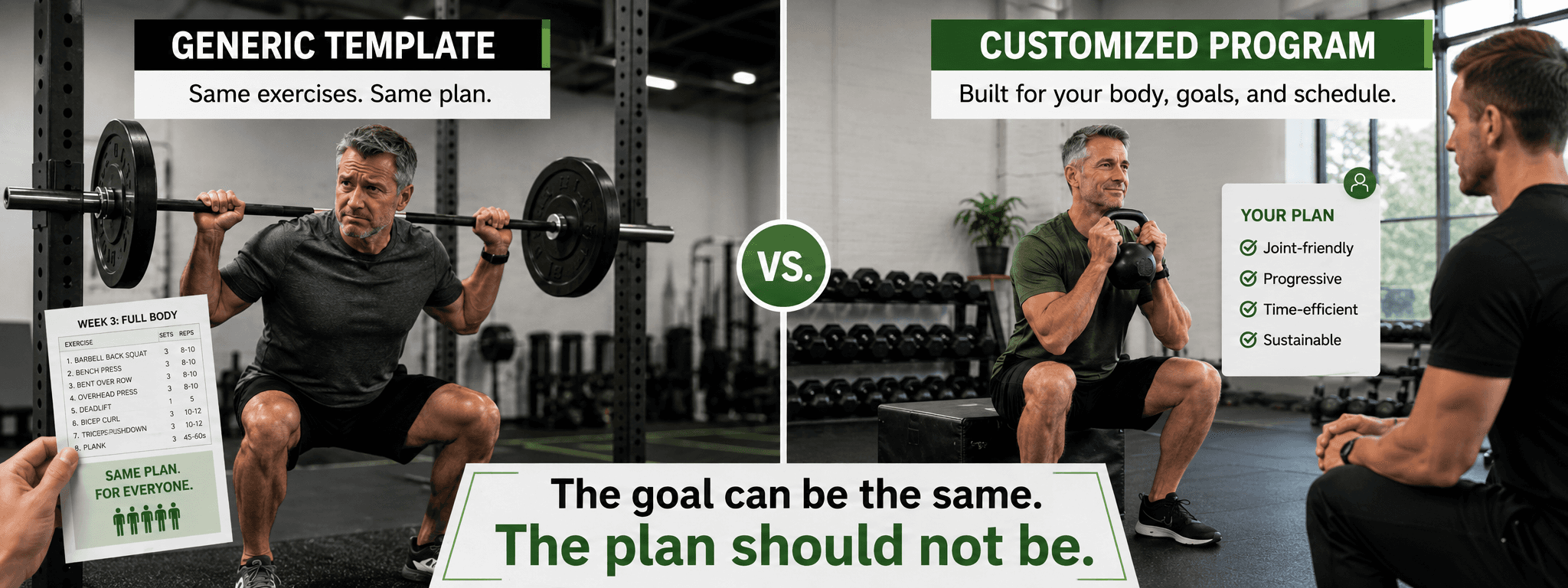
A generic workout plan can get someone started.
It gives you a list of exercises, a schedule, and something to follow. For a lot of people, that is better than having no structure at all.
But eventually, the same problem shows up.
The plan does not know you.
It does not know that your shoulder bothers you when you press overhead. It does not know that your knees feel better with one squat variation than another. It does not know that you only have three days to train, or that your energy has been low all week.
That is where generic programs start to fall apart.
The Same Exercise Does Not Work the Same Way for Everyone
This is something I see all the time.
Two people can do the same exercise and get completely different results from it.
One person may feel strong and controlled in a squat. Another may shift to one side, lose balance, or feel pressure in the knees. Someone else may not be ready for that version yet.
That does not mean the exercise is bad.
It means the exercise may need to change.
At HBR, we look at how someone actually moves before deciding what belongs in the program. Sometimes the best option is a goblet squat. Sometimes it is a box squat. Sometimes we need to work on mobility and control first.
The goal is not to force everyone into the same movement.
The goal is to find the version that works.
A Program Has to Match the Person
People often come in with similar goals.
They want to lose weight, get stronger, move better, or feel more confident in the gym.
But the way we get there should not look exactly the same for everyone.
Someone in their 50s returning after years away from training needs a different starting point than someone who has been lifting consistently. A person dealing with back discomfort may need a different plan than someone training for performance.
That is why I do not like treating a workout template like it is the answer.
A template only gives you exercises.
A good program gives you the right amount of work, the right movements, and a pace your body can actually handle.
Your Schedule Matters Too
A plan can be technically perfect and still be completely useless if it does not fit your life.
A lot of generic programs are written around four, five, or even six training days a week. That may work for someone with the time and recovery for it.
Most people I work with do not live that way.
They have jobs, families, travel, poor sleep, stressful weeks, and schedules that change.
So we build around what is realistic.
Two or three good sessions done consistently will usually beat five sessions that only happen for two weeks.
That is not lowering the standard.
That is making the plan sustainable.
The Program Should Change as You Change
This is another problem with templates.
They usually tell you what to do, but they do not tell you when to adjust.
Maybe the weight is too easy now. Maybe your form has improved. Maybe one movement keeps irritating your shoulder. Maybe you are not recovering well.
Those are all reasons to change the plan.
At HBR, we make those adjustments as we go. Sometimes we add weight. Sometimes we reduce volume. Sometimes we switch an exercise or slow the movement down.
Progress does not always mean doing more.
Sometimes progress means choosing better.
Customized Does Not Mean Complicated
A custom program does not need to look fancy.
Most people still need the basics.
They need to squat, hinge, push, pull, carry, and move with control.
The difference is how those movements are used.
One person may start with a supported sit-to-stand. Another may use a dumbbell. Someone else may be ready for a barbell.
Same general pattern.
Different starting point.
That is what good coaching should do.
The Plan Should Work in Real Life
The best program is not the one with the most exercises or the hardest workouts.
It is the one that fits your body, your goals, and your week well enough that you can keep doing it.
A generic plan may help you begin.
But if you want to keep progressing, the program has to respond to what is actually happening.
That is where coaching matters.
If you are tired of following programs that never seem to fit quite right, we can help build one around where you are now.
ARTICLES


