Training, Nutrition, and Recovery: Why One Appointment Usually Isn’t the Whole Answer
Fitness
When something feels off, most people want a clear solution.
A tight back. A sore shoulder. Low energy. Trouble recovering between workouts.
Sometimes seeing a specialist is the right move. A chiropractor, physical therapist, or another qualified provider can help identify what is going on and give you a better starting point.
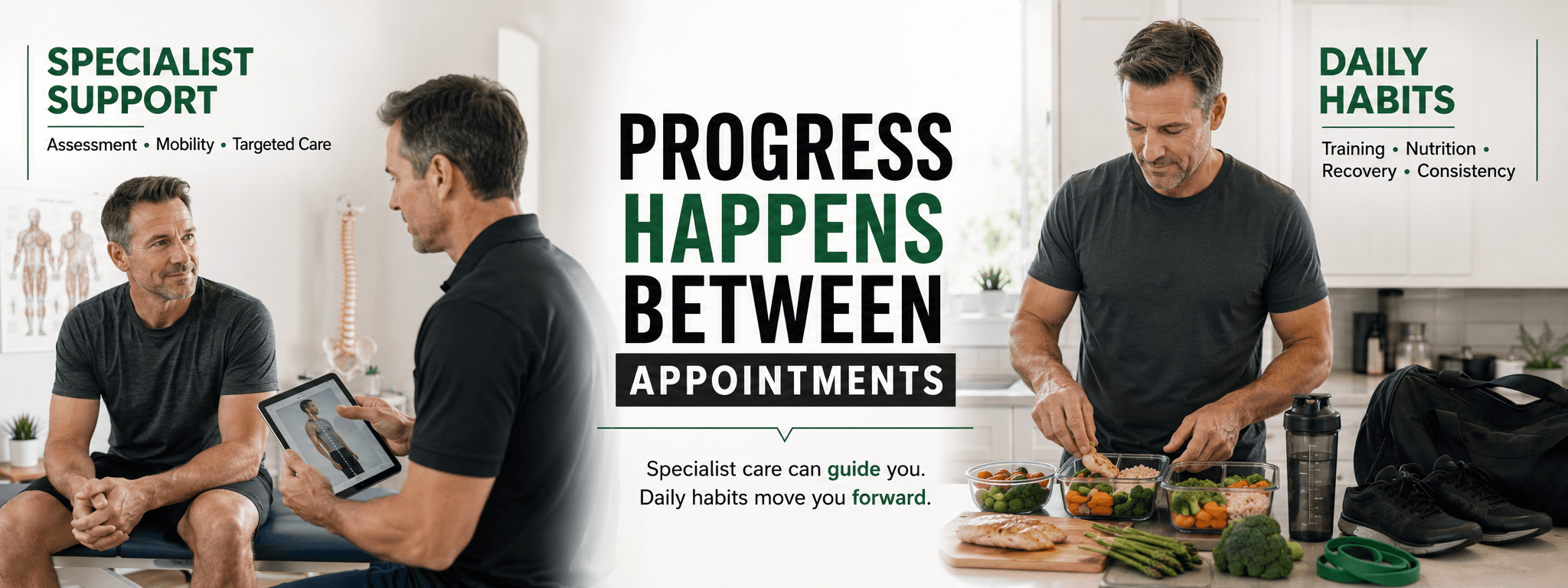
But one appointment does not replace the habits that support your body every day.
If your training, nutrition, hydration, and recovery are all inconsistent, you may feel better temporarily without actually changing the bigger picture.
Specialists Can Help — But They Are Only One Part of the Process
There is real value in getting another set of eyes on an issue.
Sometimes you need help improving mobility, reducing discomfort, or understanding why a certain movement keeps causing problems. That is where a qualified specialist can be useful.
But there is a difference between getting support and expecting a quick fix.
If you leave an appointment and go right back to the same habits, the same issues often show up again. You are still sitting the same way, moving the same way, sleeping the same way, and eating in a way that may not support recovery.
The appointment may help.
The everyday routine is what makes the improvement last.
Nutrition Affects More Than Weight Loss
A lot of people only think about nutrition when they are trying to lose weight.
But food also affects energy, recovery, strength, and how well your body handles training.
If you are skipping meals, under-eating protein, barely drinking water, or relying on convenience food most of the week, it is harder for your body to recover. You may feel tired during sessions, sore for longer than expected, or frustrated that progress feels slow.
That does not mean you need a strict meal plan.
For most people, it means getting the basics right more often:
Eating regular meals instead of waiting until you are starving
Including a reliable source of protein
Drinking enough water throughout the day
Planning ahead for busy days so every meal is not a last-minute decision
Simple habits are usually more effective than an overly restrictive plan you cannot maintain.
Meal Planning Should Make Your Week Easier
Good meal planning does not mean spending your entire Sunday cooking or eating the same food every day.
It is about reducing the number of decisions you have to make when life gets busy.
That may look like choosing a few easy breakfasts, keeping simple lunch options ready, or planning dinners before the week starts. It could also mean keeping snacks on hand so you are not going into a workout under-fueled.
At HBR, this is part of the bigger conversation when someone is not recovering well or feels like they are doing the work without seeing progress.
Sometimes the training plan needs to change.
Sometimes the missing piece is what is happening outside the gym.
Training Helps You Hold Onto the Progress
A specialist may help address discomfort or improve mobility.
Training is what helps you build strength around that improvement.
That is an important distinction.
If your hips feel better after an adjustment or mobility session, the next step is not to assume the job is done. The next step is to build enough strength and control so your body can handle everyday movement more comfortably.
That might mean improving core stability, strengthening your glutes, cleaning up your squat pattern, or gradually rebuilding confidence around a movement you have been avoiding.
At HBR, we look at the whole picture. We are not just asking whether you can get through a workout. We are paying attention to how you move, how you recover, and what may be making progress harder than it needs to be.
The Basics Still Matter
There is no single appointment, supplement, or perfect meal plan that fixes everything.
Most long-term progress comes from doing the basics well:
Training consistently
Eating enough to support your goals
Planning meals so your week does not fall apart
Getting enough sleep and recovery
Seeing a specialist when something needs more attention
That may not sound exciting.
But it works.
And it gives your body a much better chance of improving instead of going through the same cycle over and over again.
Support Works Best When the Pieces Work Together
You do not have to choose between training and seeing a specialist.
The best approach is often a combination.
Get the right support when you need it. Then make sure your routine is helping you maintain the progress.
Because feeling better for a few days is useful.
Building habits that help you feel better long-term is the real goal.
If you are training consistently but still feel like something is missing, we can help you look at the bigger picture and build a plan that fits your life.
ARTICLES


